
Adult Productions Vs Mainstream Cinema
Adult Productions Vs Mainstream Cinema
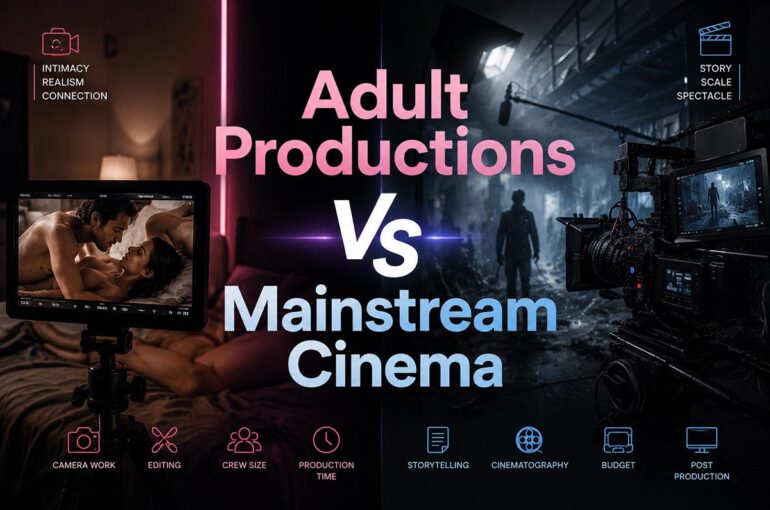
When people think about filmmaking, Hollywood often comes to mind: massive budgets, elaborate sets, visual effects, and months of planning. Adult productions, on the other hand, are frequently misunderstood as being “simpler” because they usually have shorter runtimes and smaller crews. In reality, while the objectives differ significantly, both industries rely on many of the same filmmaking fundamentals.
From pre-production planning to post-production editing, adult content creation involves technical decisions, creative direction, and logistical coordination that are often overlooked. Understanding these differences offers a fascinating glimpse into two industries that share the same tools but pursue very different goals.
Different Objectives, Different Storytelling
The most obvious distinction between mainstream cinema and adult productions lies in their purpose.
Traditional films are typically built around storytelling. Every technical decision—from lighting to music—is designed to support a narrative, develop characters, and evoke emotional responses from the audience.
Adult productions, while they may include story elements, generally prioritize creating an intimate viewing experience over developing complex narratives. The pacing, camera work, and editing often serve to maintain realism and connection rather than dramatic tension.
This difference in objectives influences every stage of production.
Pre-Production: Planning the Vision
Regardless of genre, successful productions begin long before cameras start rolling.
Mainstream Cinema
A feature film may spend months—or even years—in pre-production. This phase often includes:
- Scriptwriting and revisions
- Storyboarding
- Casting
- Location scouting
- Costume design
- Production design
- Budget planning
- Scheduling
- Rehearsals
- Visual effects planning
Large productions coordinate hundreds of people across multiple departments.
Adult Productions
Adult productions generally have much shorter pre-production schedules, particularly for content intended for online platforms.
Planning typically focuses on:
- Performer scheduling
- Location selection
- Wardrobe
- Lighting setup
- Camera equipment
- Health and safety procedures
- Legal documentation
- Consent protocols
- Content goals and creative direction
For creator-driven productions, the planning process may be handled by only one or two people, especially when creators manage their own businesses.
Crew Size and Roles
One of the biggest differences between the two industries is the size of the production team.
A mainstream feature film can involve hundreds of professionals, including:
- Director
- Assistant directors
- Cinematographers
- Camera operators
- Gaffers
- Grip crews
- Sound engineers
- Makeup artists
- Costume designers
- Production assistants
- Editors
- Colorists
- Visual effects artists
By contrast, many adult productions operate with remarkably lean teams.
Independent productions may include:
- Director
- Camera operator
- Lighting assistant
- Production coordinator
Some creator-produced content is filmed entirely by the performers themselves using professional cameras, smartphones, or compact cinema equipment.
Camera Techniques
Although both industries use similar camera technology, they often apply it differently.
Mainstream films emphasize cinematic composition. Directors use wide establishing shots, close-ups, tracking shots, drones, cranes, and carefully choreographed camera movement to immerse viewers in a fictional world.
Adult productions generally favor camera work that feels more immediate and observational. Longer takes, simpler movements, and sustained framing help maintain continuity and create a sense of authenticity.
In recent years, high-resolution digital cameras have significantly improved production quality across both industries.
Lighting
Lighting is one of the most important aspects of visual storytelling.
Traditional cinema often uses dramatic lighting to establish mood, tension, mystery, or emotion.
Adult productions typically aim for consistent, flattering illumination that maintains clear visibility while preserving a natural appearance.
Soft lighting, large diffusers, and balanced color temperatures are common choices because they reduce harsh shadows and create a comfortable visual environment.
Sound Design
Audio plays a very different role in each industry.
Feature films invest heavily in:
- Dialogue recording
- Foley effects
- Ambient sound
- Music composition
- Surround sound mixing
Entire departments may spend months perfecting the soundtrack.
Adult productions usually place greater emphasis on capturing clean dialogue and natural ambient audio while keeping post-production relatively straightforward. Music, when used, often serves as subtle background rather than a dominant storytelling element.
Editing: Two Different Philosophies
Editing shapes the audience’s experience more than almost any other production stage.
Mainstream Cinema
Editors carefully control pacing, suspense, emotional rhythm, and continuity.
A two-hour movie may generate hundreds of hours of footage, requiring months of editing before reaching its final form.
Editors collaborate closely with directors to determine:
- Scene order
- Shot selection
- Transitions
- Music timing
- Visual effects integration
Adult Productions
Editing generally prioritizes flow, continuity, and viewer engagement.
Cuts tend to be less frequent than in action films, allowing scenes to unfold more naturally. Color correction, audio balancing, and basic visual cleanup are still common, but extensive visual effects are relatively rare.
For creator platforms, turnaround time is often much shorter, with many videos edited and published within days.
Color Grading
Professional color grading is standard across both industries.
Mainstream films often use stylized color palettes to reinforce themes or emotional tone.
Adult productions typically favor natural skin tones and clean, realistic color reproduction. The goal is usually consistency rather than dramatic visual stylization.
Performance and Emotion
Perhaps the most interesting difference lies in performance itself.
Actors in traditional films portray fictional characters experiencing scripted emotions. Performances may involve multiple rehearsals, numerous takes, and extensive direction to achieve subtle emotional nuance.
Adult performers often balance multiple responsibilities simultaneously. In addition to acting, many are independent creators managing production schedules, marketing, subscriber communication, and business operations.
Professionalism, communication, and trust are essential. Clear expectations, consent, and coordination between everyone involved contribute to a productive working environment.
Post-Production Workflow
Once filming concludes, both industries move into post-production.
For mainstream films, this stage can include:
- Editing
- Sound mixing
- ADR (Automated Dialogue Replacement)
- Visual effects
- Motion graphics
- CGI
- Color grading
- Music scoring
- Subtitle creation
- Marketing materials
The process may take several months.
Adult productions generally have shorter post-production cycles but still benefit from:
- Video editing
- Color correction
- Audio cleanup
- Thumbnail creation
- Metadata optimization
- Encoding for multiple platforms
- Watermarking
- Compression for streaming
Independent creators frequently handle many of these tasks themselves.
Distribution Has Changed Everything
Historically, both industries relied on centralized distribution systems.
Today, digital platforms allow filmmakers and creators to reach audiences directly.
Mainstream films use streaming services, digital rentals, and theatrical releases.
Adult creators increasingly rely on subscription platforms, membership sites, direct sales, and personal websites, giving them greater control over their content and business models.
Technology Is Closing the Gap
Advances in camera technology have dramatically reduced the differences in production quality.
Mirrorless cameras, LED lighting, affordable cinema lenses, and professional editing software have become accessible to independent creators.
As a result, even small production teams can produce visually polished content that rivals much larger studios in technical quality.
Artificial intelligence is also beginning to influence both industries through automated editing assistance, subtitle generation, translation, noise reduction, and image enhancement.
Conclusion
While mainstream cinema and adult productions pursue different creative goals, they share a common foundation in the art and craft of filmmaking. Both require planning, technical expertise, creative decision-making, and careful execution to produce compelling visual content.
The most significant differences lie not in the equipment they use, but in the intentions behind each creative choice. Mainstream films are generally driven by narrative and character development, while adult productions often prioritize intimacy, authenticity, and direct audience engagement.
As digital technology continues to evolve, the technical gap between large studios and independent creators continues to narrow. Today, success in either field depends less on access to expensive equipment and more on thoughtful production, effective storytelling—or experience design—and a deep understanding of the audience.
Ultimately, both forms of filmmaking demonstrate that great production is not defined solely by budget or scale, but by the ability to use the language of cinema to achieve a specific creative vision.